
What does assisted living do to support senior mobility?
Assisted living promotes mobility by combining a safer living environment with regular movement, personal assistance, and opportunities for daily activity. The goal is not simply helping residents walk from one room to another. It is preserving strength, balance, confidence, and independence for as long as possible.
Mobility can change gradually. A person may begin avoiding stairs, walking less because of fatigue, or relying on furniture for support. In an assisted living setting, staff can notice these changes earlier and help residents remain active before a minor limitation becomes a serious loss of function.
Support may include:
- Assistance with walking, transfers, dressing, or bathing
- Exercise and wellness activities suited to different ability levels
- Clear hallways, handrails, and accessible common areas
- Prompt attention to pain, dizziness, weakness, or balance concerns
- Daily routines that encourage residents to move rather than remain seated for long periods
This approach is different from treating every resident as if they needs the same level of help. Appropriate assistance should encourage safe participation, not unnecessary dependence.
Why does movement matter for older adults?
Regular movement helps maintain the physical abilities used in everyday life. Walking, standing, reaching, and changing positions can support leg strength, joint flexibility, circulation, posture, and balance.
Mobility also affects emotional well-being. Residents who can move more comfortably may be more likely to attend meals, join activities, visit with neighbors, and spend time outdoors. These social connections can reduce isolation and help people feel more in control of their daily lives.
Inactivity can create a difficult cycle. A person may sit more because walking feels tiring or uncertain. Over time, reduced activity can lead to weaker muscles and less confidence, making movement feel even more difficult. Assisted living can interrupt that cycle through regular, manageable activity.
Movement does not have to mean strenuous exercise. Walking to the dining room, standing during part of a group activity, practicing safe transfers, or taking a supervised stroll may all contribute to better function.
How do assisted living communities make walking safer?
Environmental design plays a major role in mobility. A safer setting reduces obstacles that can cause trips and gives residents useful support as they move through the day.
Helpful features may include:
- Wide, unobstructed walking paths
- Handrails in hallways and bathrooms
- Adequate lighting, including nighttime lighting
- Non-slip flooring and secure rugs
- Seating areas where residents can rest
- Elevators or single-level layouts that reduce stair use
- Accessible dining, activity, and outdoor spaces
Bathrooms deserve particular attention because wet floors, awkward turns, and low seating can increase fall risk. Grab bars, raised toilet seats, shower seating, and accessible controls may help residents complete personal-care tasks more safely.
For residents of Lansdale, seasonal conditions can also affect outdoor mobility. Snow, ice, wet leaves, and uneven surfaces may make walking more hazardous during parts of the year. Indoor walking routes and activity spaces provide useful alternatives when outdoor paths are slippery or uncomfortable.
What kinds of mobility activities are common?
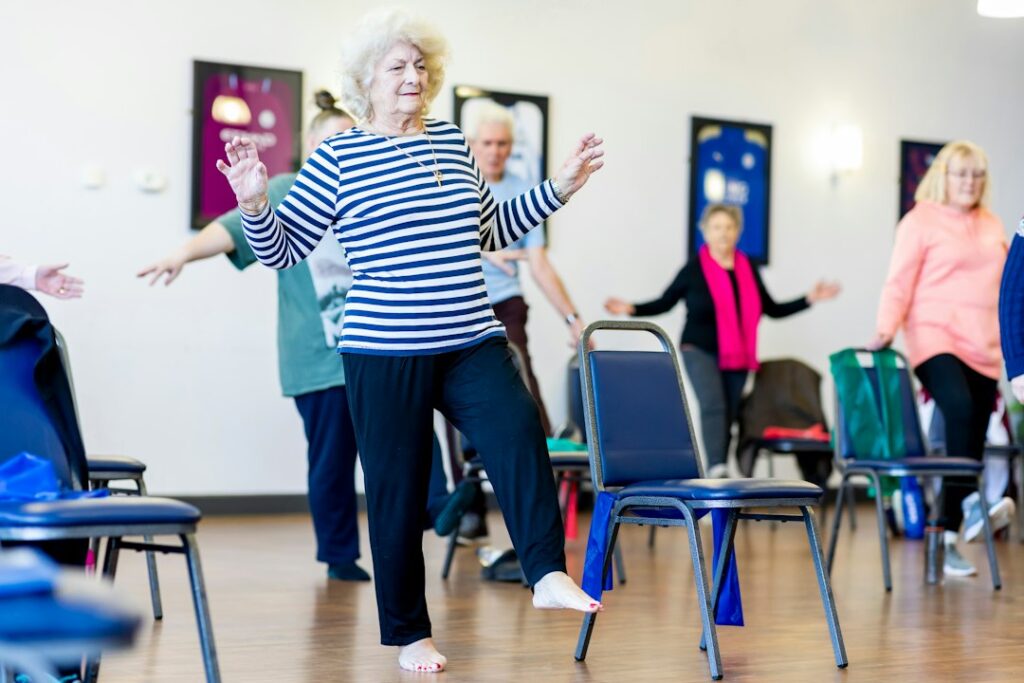
Mobility activities should match a resident’s health, strength, and comfort level. A well-designed program may include both structured exercises and ordinary opportunities to move during the day.
Examples include:
- Short walking sessions with rest breaks
- Seated or standing strength exercises
- Balance practice near a stable support
- Gentle stretching for the legs, shoulders, and back
- Repeated sit-to-stand practice
- Range-of-motion activities
- Light dancing or rhythm-based movement
- Supervised outdoor walks
- Group activities that involve reaching, stepping, or changing positions
Some residents may use canes, walkers, wheelchairs, or other mobility aids. These tools can improve safety when properly fitted and used correctly. A mobility aid should not automatically be viewed as a sign of failure or dependence. For many older adults, it is a practical way to remain active.
How do staff support residents without taking away independence?
The most helpful support is often the least restrictive assistance that keeps a resident safe. Staff may provide an arm for balance, remind someone to use a walker, help with a transfer, or accompany a resident on a longer walk.
Too much assistance can sometimes reduce activity. If staff complete tasks that a resident can safely do alone, the resident may lose opportunities to practice strength and coordination. Too little assistance, however, can increase the risk of falls or injury.
A balanced approach considers what the resident can do safely today and what may be possible with practice, equipment, rest, or a small adjustment to the environment. Abilities can vary from morning to evening, and they may change during illness, after hospitalization, or when medications are adjusted.

Family members can help by sharing information about a resident’s usual walking pattern, previous falls, preferred mobility aids, and personal goals. A resident may care more about walking to meals independently, participating in an activity, or getting outside than completing a formal exercise routine.
What health changes can affect mobility?
Mobility can be influenced by arthritis, osteoporosis, Parkinson’s disease, stroke-related weakness, vision changes, neuropathy, heart or lung conditions, and memory impairment. Pain, poor sleep, dehydration, infection, and medication side effects may also cause sudden changes in walking or balance.
A new decline should not automatically be treated as normal aging. Warning signs that deserve prompt attention include:
- New or repeated falls
- Sudden weakness or difficulty standing
- Dizziness or faintness
- Shuffling, limping, or a major change in walking
- Increased dependence on furniture or walls
- New confusion
- Pain that limits movement
- Shortness of breath during ordinary activity
A health evaluation may be needed when these changes appear. Safety concerns, possible injuries, and sudden symptoms require timely medical attention rather than simply increasing exercise.
Can assisted living help after a fall or hospitalization?
Assisted living may provide a supportive setting during the transition back to everyday routines, although it is not the same as short-term rehabilitation or skilled nursing care. Some residents may need rehabilitation services before returning to their usual level of activity.
After a fall or hospital stay, mobility support may focus on safe transfers, walking distances, personal care, medication routines, and confidence. Progress should be gradual. A resident may initially need more supervision and later regain the ability to move with less assistance.
Clear communication among the resident, family, medical providers, and care staff helps prevent mixed instructions. It is also useful to review footwear, glasses, mobility aids, pain control, and the layout of the resident’s room.
What can families ask about mobility before a move?
Families considering assisted living should ask specific questions rather than relying on broad statements about wellness or independence.
Useful questions include:
- How are residents’ walking and transfer needs assessed?
- What happens if a resident begins falling more often?
- Are there indoor routes for walking during severe weather?
- How are walkers, wheelchairs, and other mobility aids accommodated?
- Are exercise or movement activities offered at different ability levels?
- How does staff respond when a resident refuses assistance?
- What support is available after a hospitalization?
- How are changes in mobility communicated to families?
The answers can reveal whether mobility is treated as part of everyday care or only addressed after a problem occurs. A supportive setting recognizes that safe movement is connected to dining, social life, personal care, sleep, confidence, and quality of life—not just exercise.
